
Configuring the External Portal
To set up the External Portal in SeaTicket:- In the left sidebar, click Settings.
- Find the Support portal section and toggle it on.
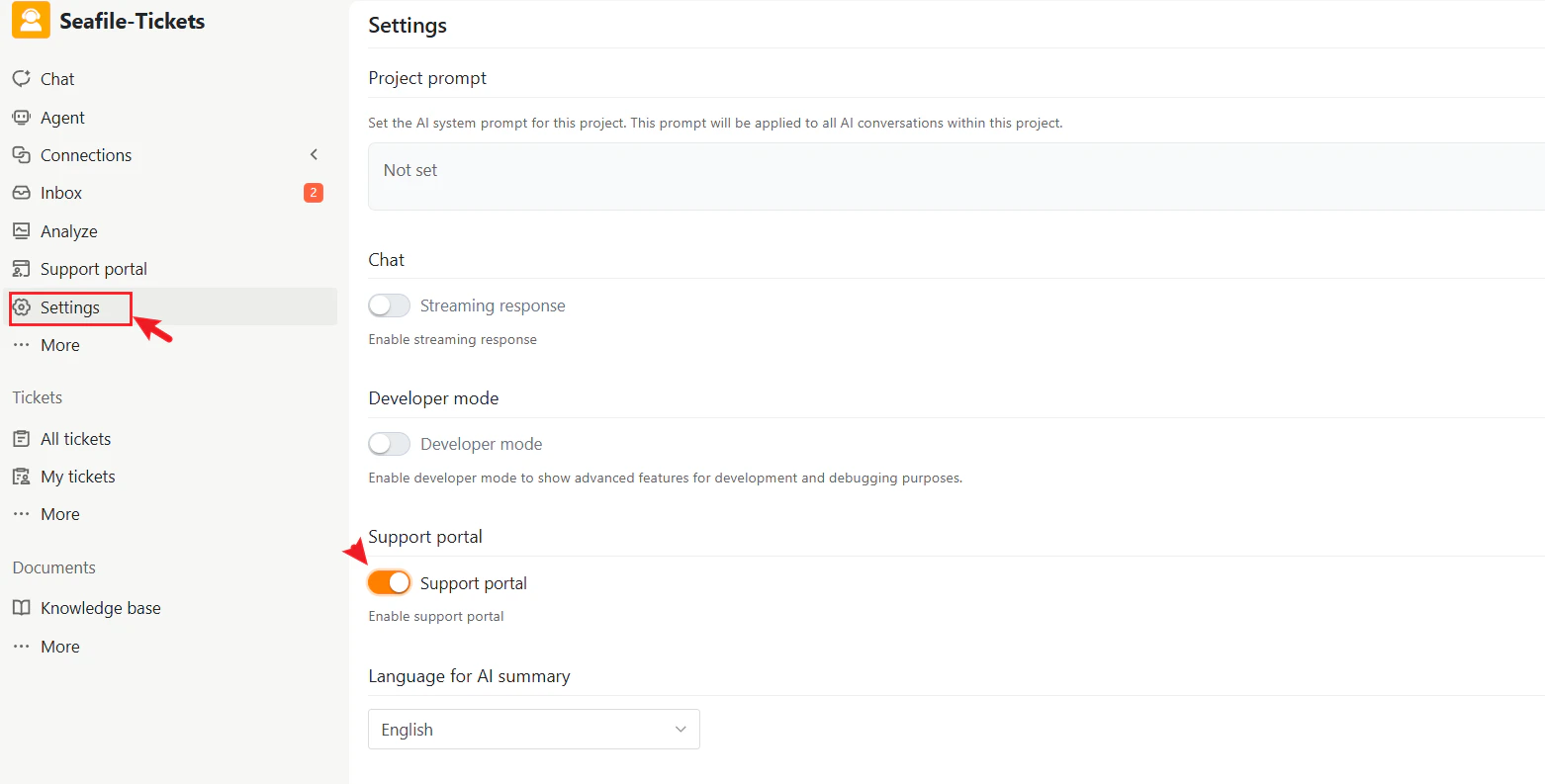
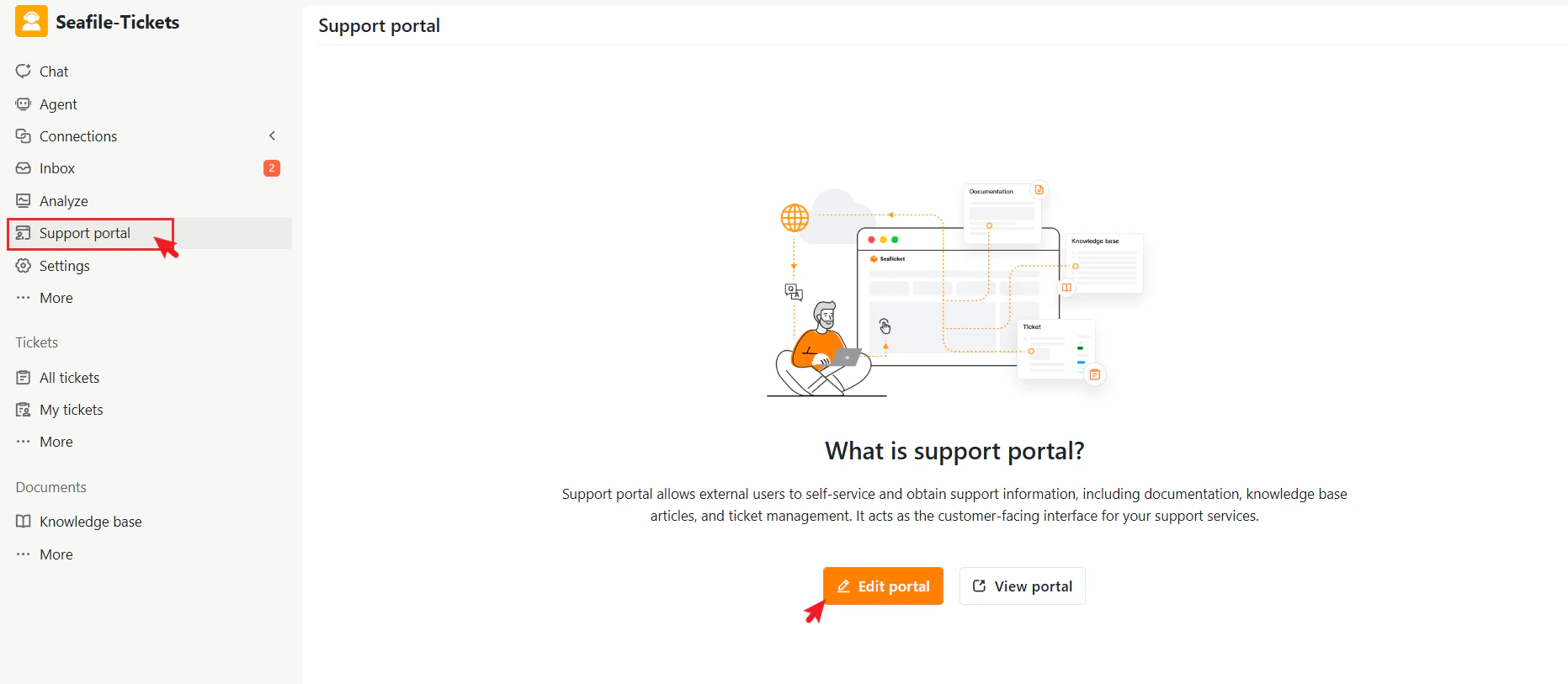
- Once enabled, Support portal appears in the left sidebar. Click it to access it.
- Click Edit portal to configure the portal settings.
Setting up the External Portal
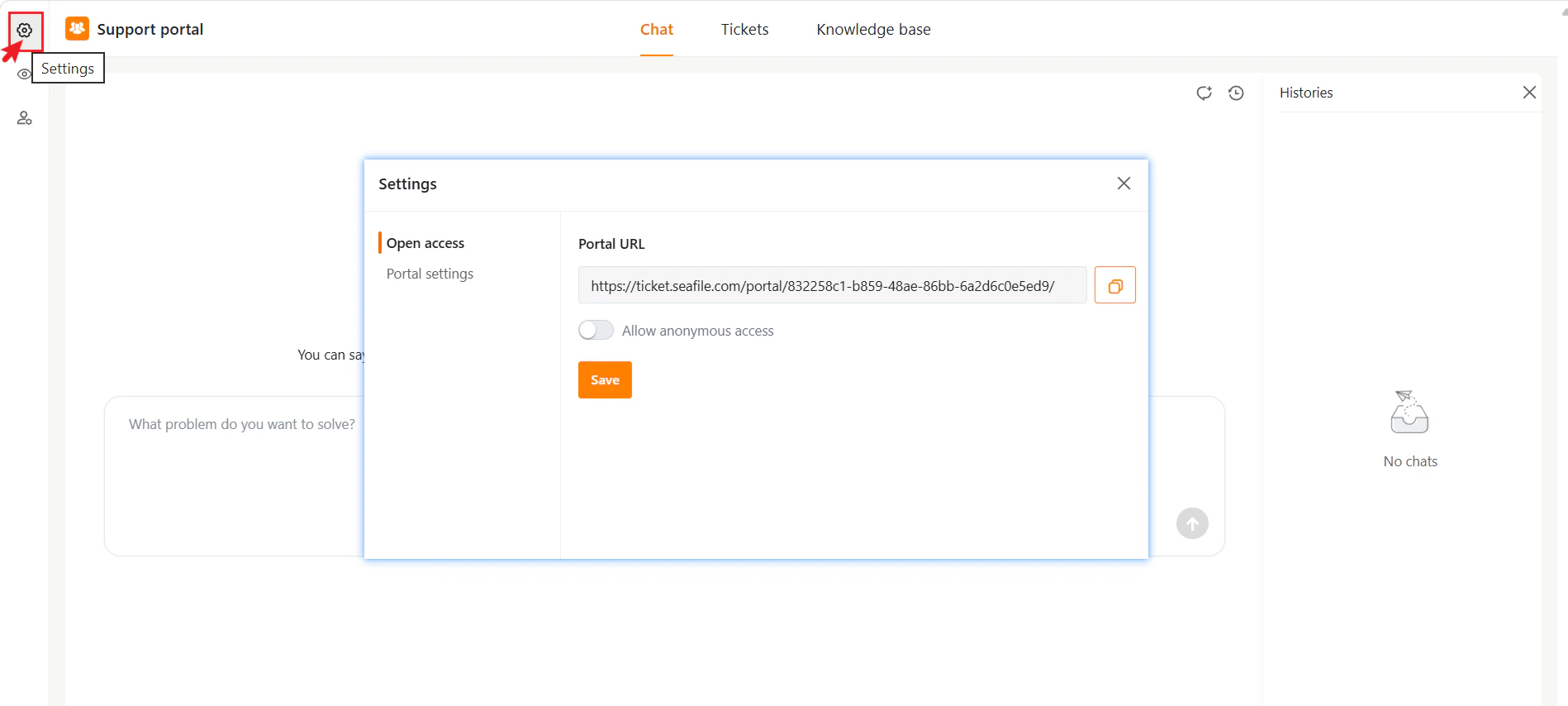
Once on the External Portal configuration page, use the Settings panel (visible on the left) to customize the portal:- Open access — Control whether users must sign in to access the portal.
- Portal settings — Configure how content and AI responses are displayed, including Knowledge Base visibility and AI data sources.
Portal URL
A unique portal URL enables external access. Share this link with customers or publish it on your website so they can submit tickets, view knowledge bases, or check ticket status. When users access the portal via the shared URL:- Logged-in users (with a SeaTicket account) can access full features, including Chat and ticket submission.
- Anonymous users may have limited access (for example, Knowledge Base only)
- Administrators cannot track individual identity or login activity for anonymous users.
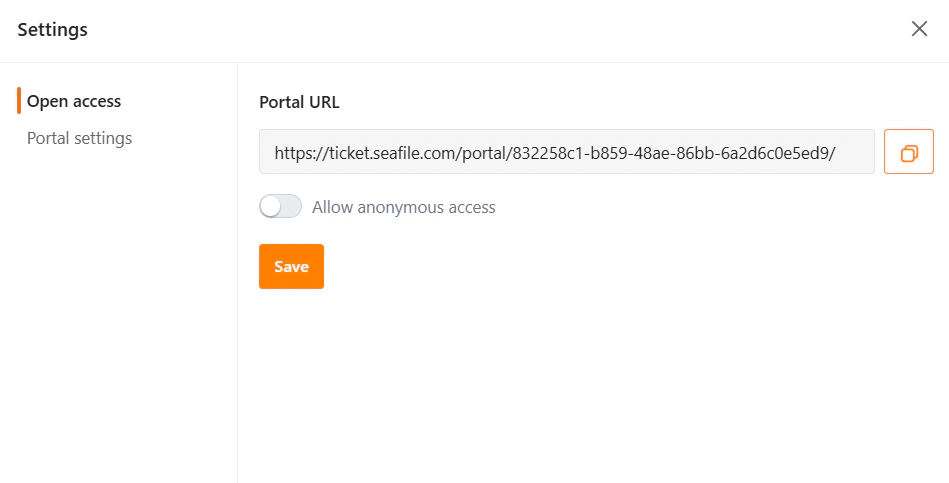
Allow Anonymous Access
Enable this option to let users access the portal without signing in. When disabled, only users with a SeaTicket account can access the portal.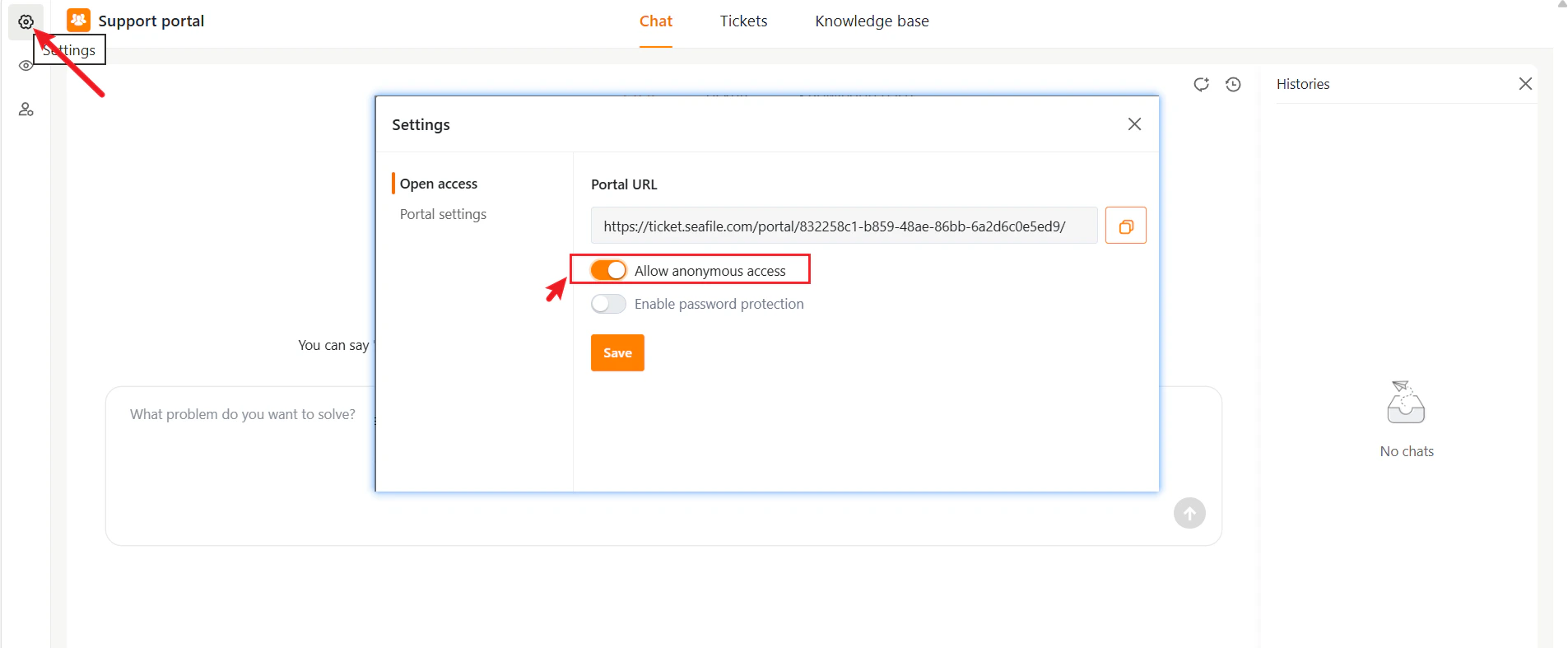
Enable Password Protection
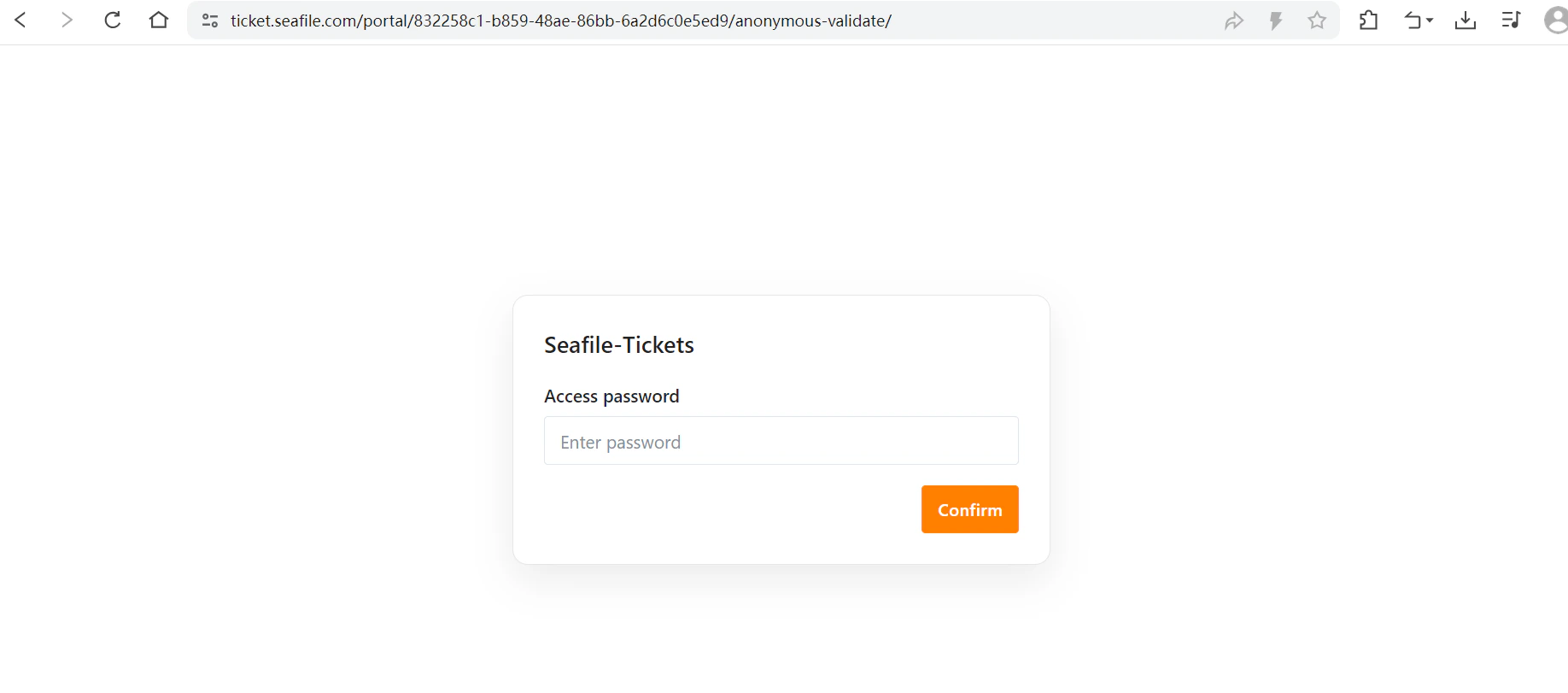
Available only when Allow Anonymous Access is enabled. Once activated, users must enter a password before accessing the portal.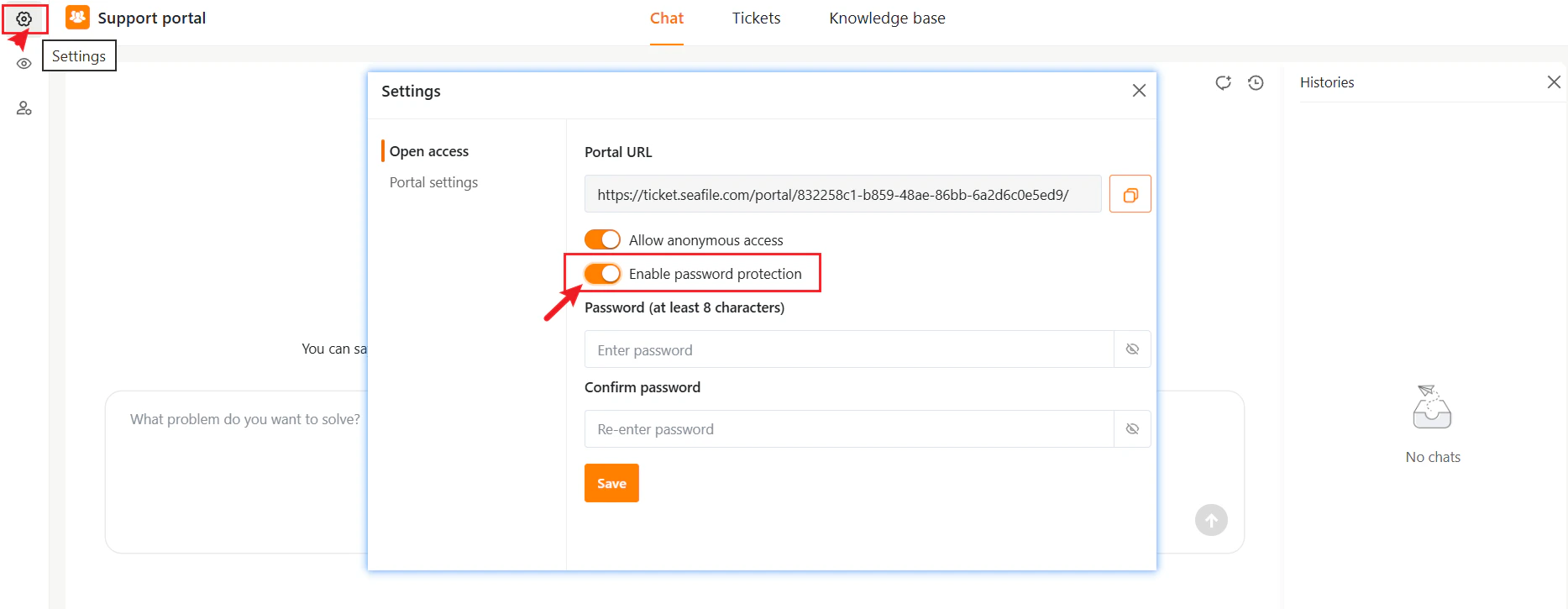
Show Knowledge Base
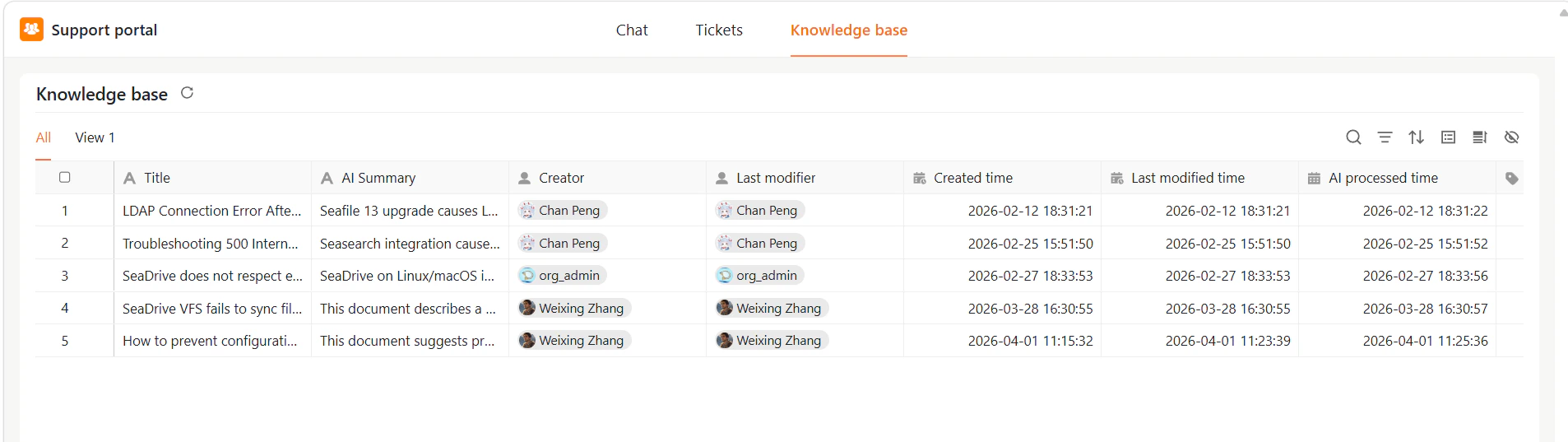
Control whether the Knowledge Base is visible. When enabled, users can browse the knowledge base directly from the portal.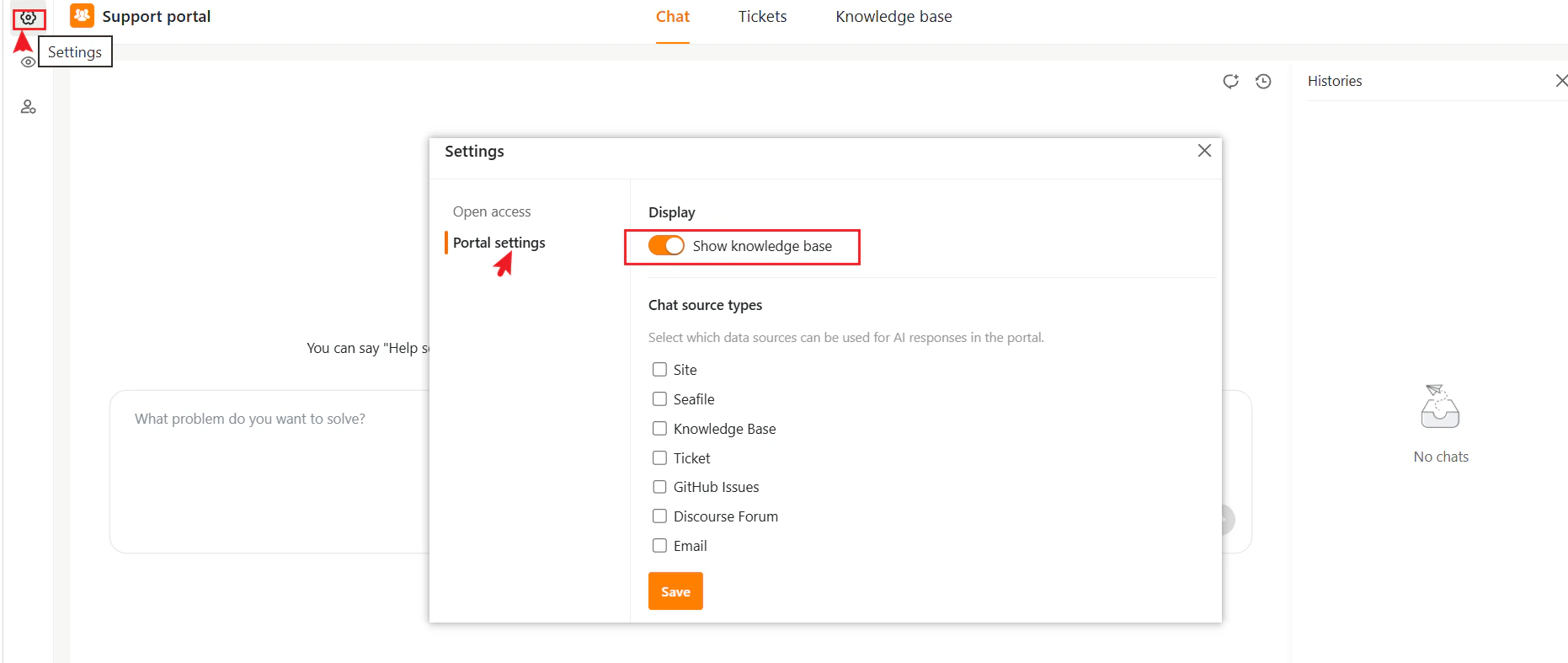
Chat Source Configuration
Define which data sources the AI Chat uses to generate responses. Selecting appropriate sources lets you control the quality and scope of the AI’s answers.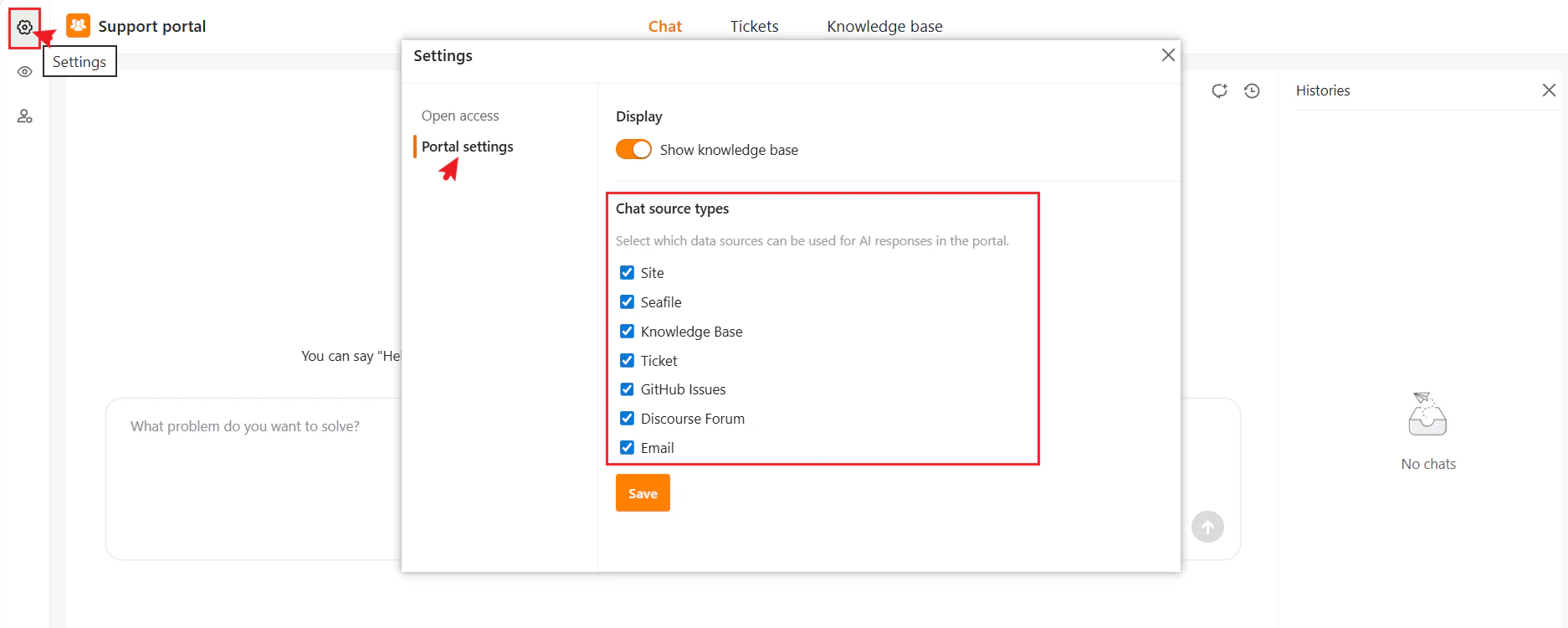
User Management
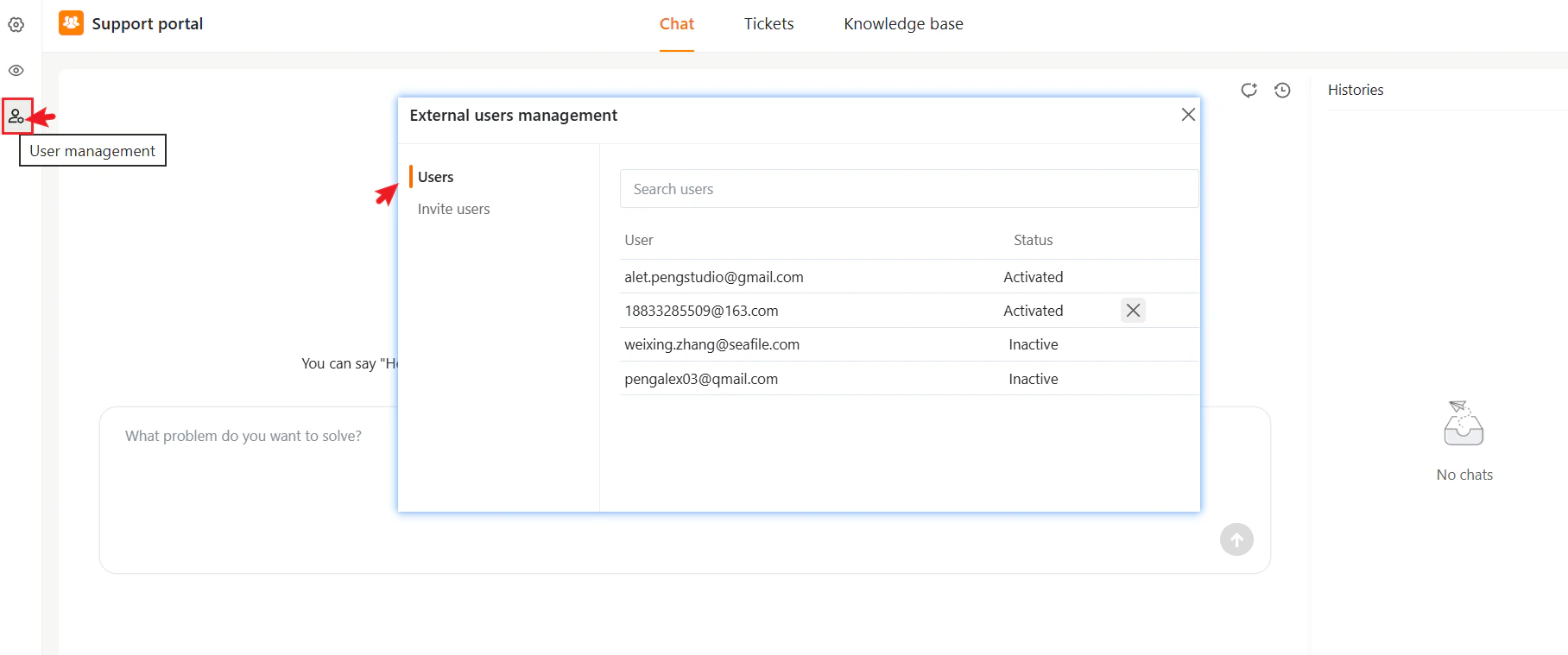
The External Users Management panel allows administrators to manage external user access, including viewing user status and inviting new users.Users Tab
The Users tab displays a list of all external users with the following information:- User: Email address
- Status:
- Activated: User has access and can log in
- Inactive: User has not activated their account or access has been disabled
- Search Users: Use the search bar to quickly find users by email.
- Remove User: Click the X icon next to a user to delete or revoke access.
Inviting New Users
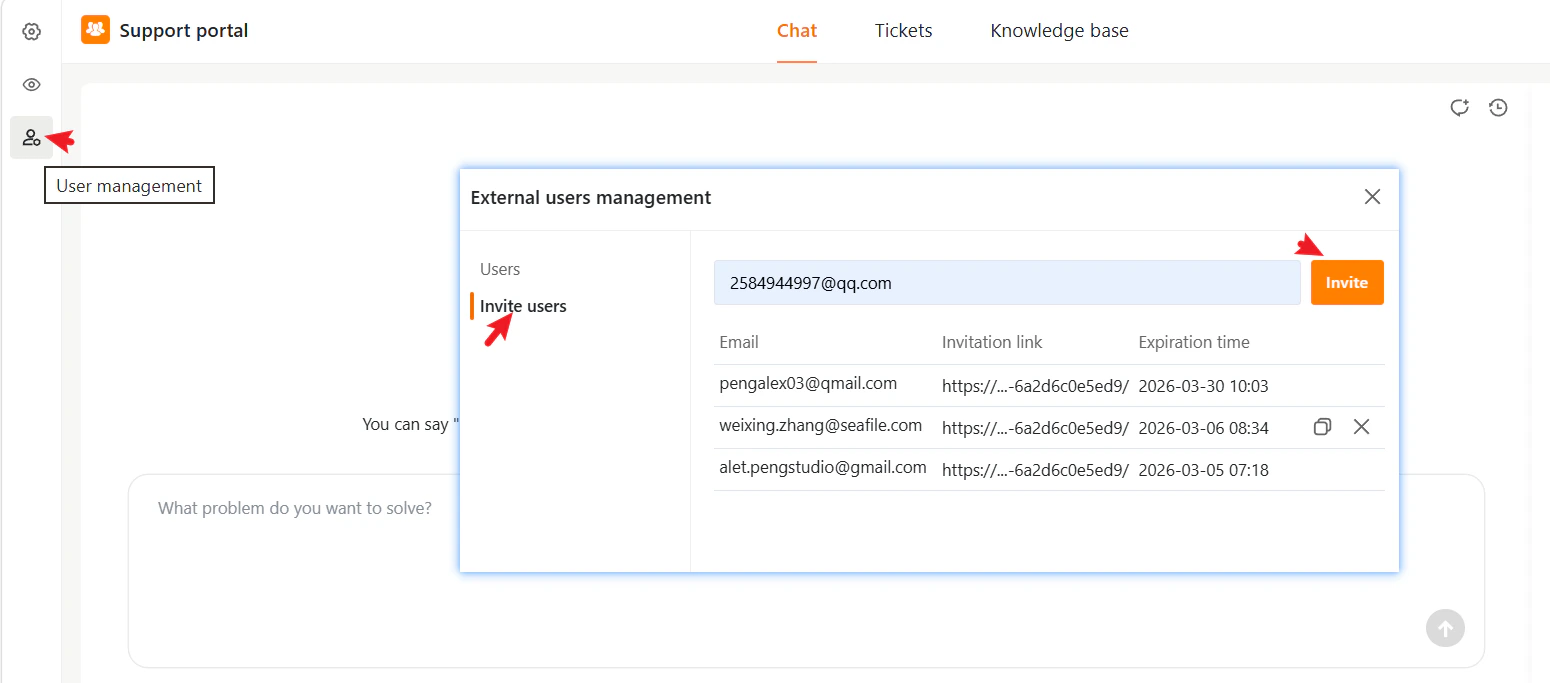
In addition to the Portal URL, you can invite specific users to temporarily join your External Support Portal via email invitations. Steps to invite a new user:- Go to User management in the left navigation bar.
- Select the Invite users tab.
- Enter the user’s email address in the Email field.
- Click Invite to create a unique invitation link.
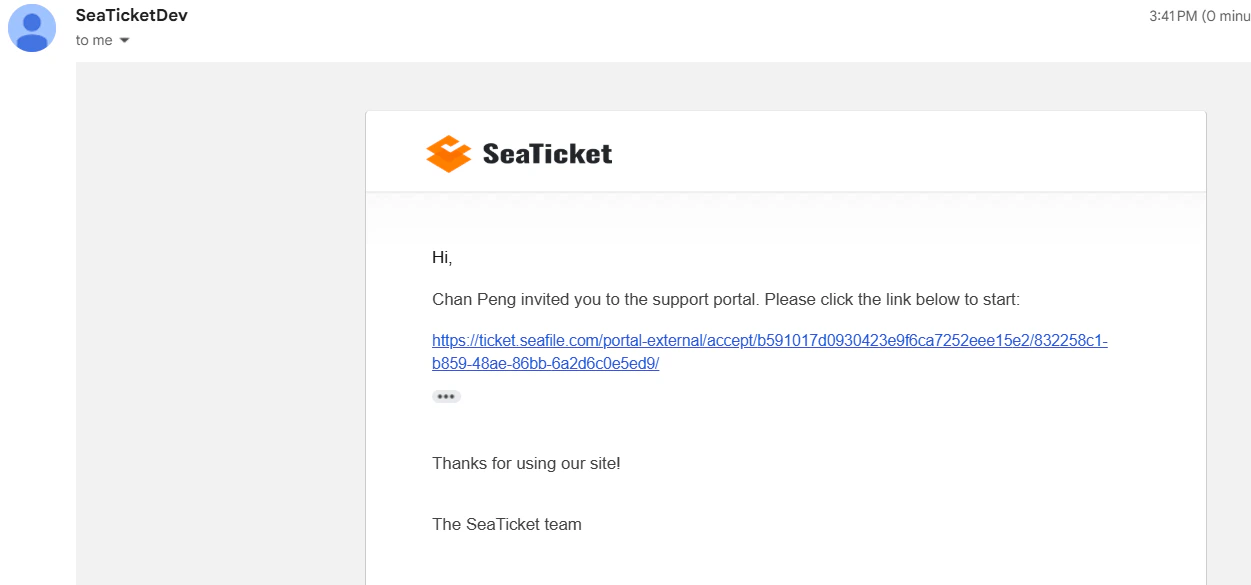
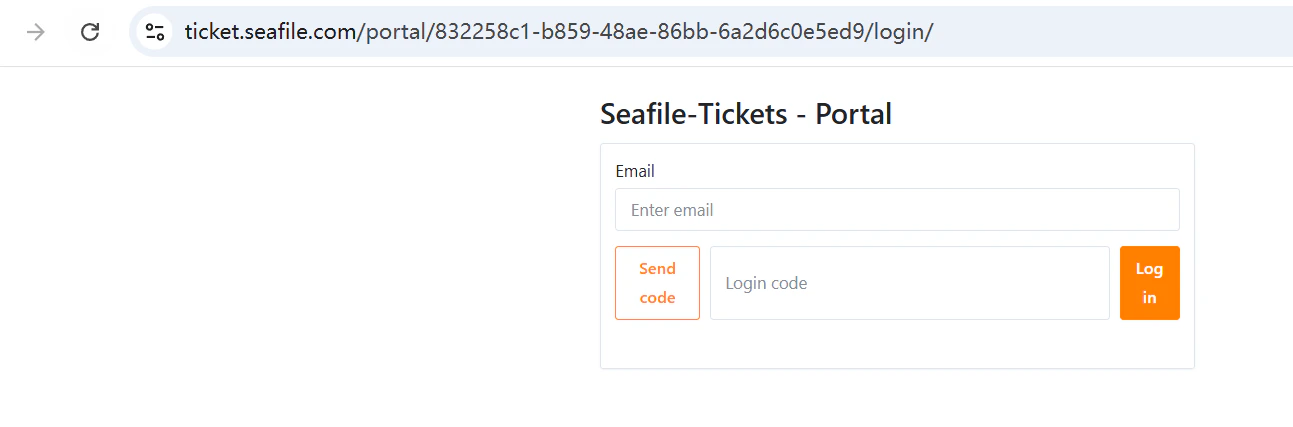
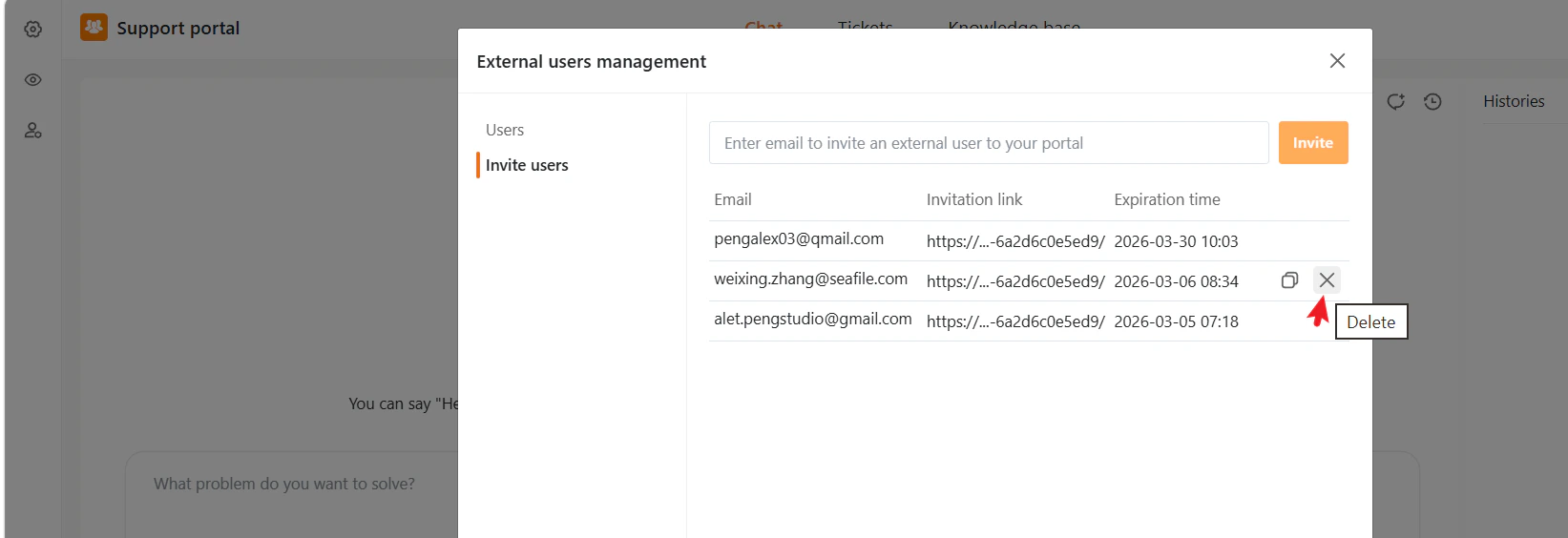
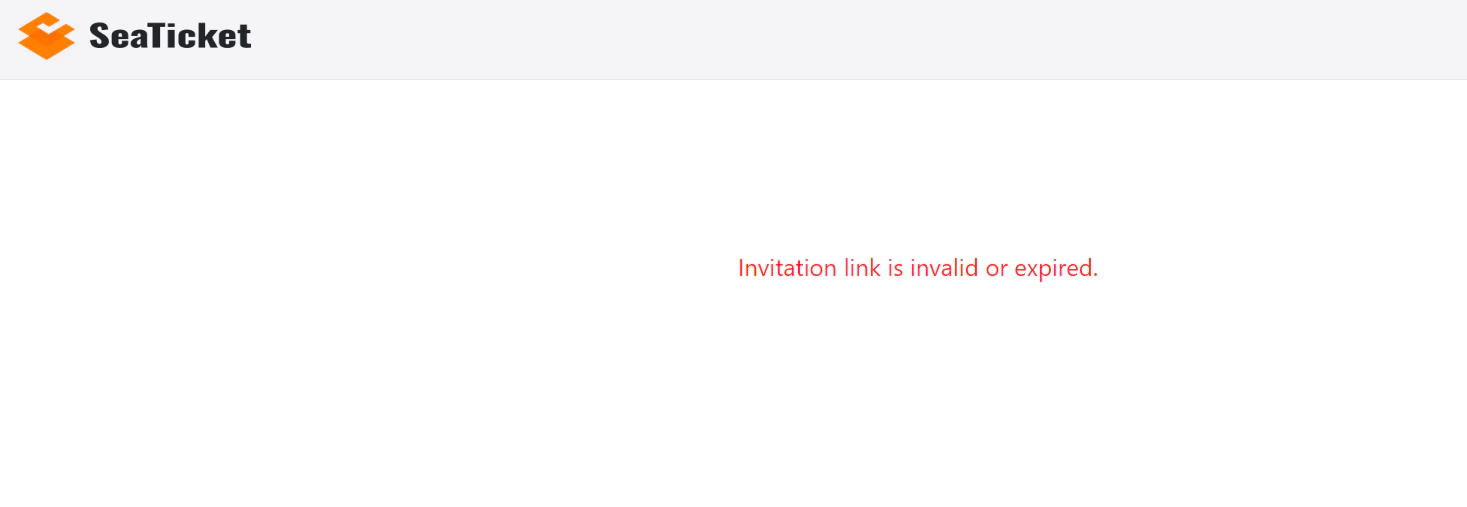
Users invited via email can be identified and managed by administrators, including tracking their access status.If an invitation link is deleted or expires, the invited user will no longer be able to access the External Support Portal using that link—even if they have previously accessed it.