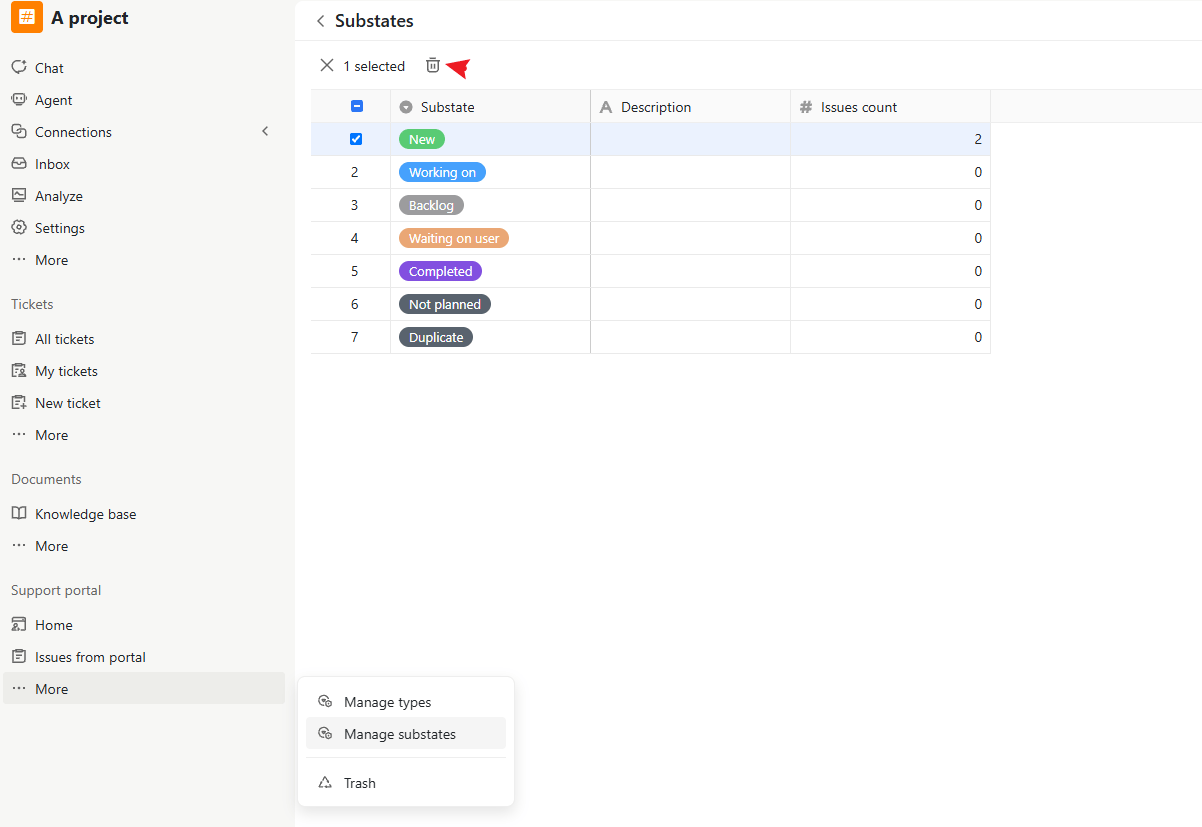

- Types describe the category of a ticket — Bug, Feature, Question, and so on.
- Substates describe progress within a state — New, Working on, Waiting on user, and so on.
Manage Issue Types
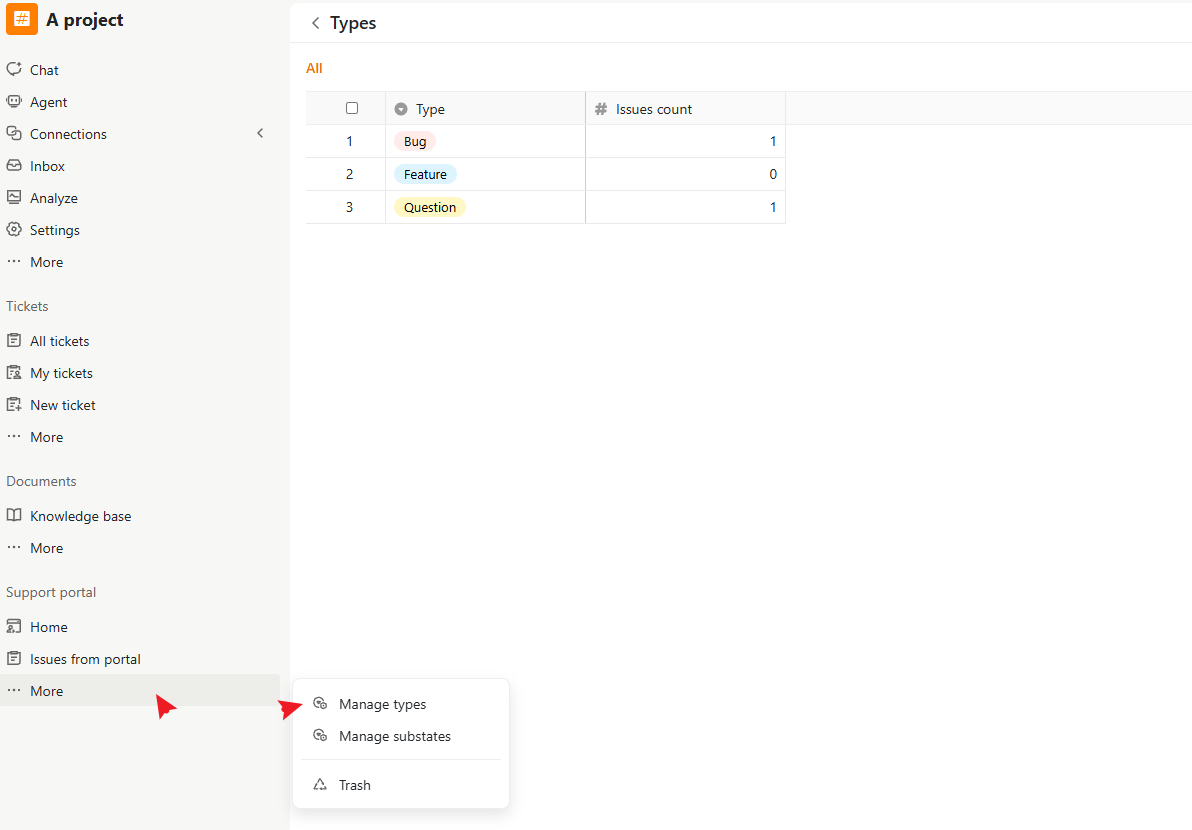
Issue types are used to classify issues submitted from the Support Portal. The Types page displays all configured issue types and the number of issues associated with each type.Access the Type Management Page
- In the left sidebar, go to Support portal.
- Click More.
- Select Manage types.
Create a New Issue Type
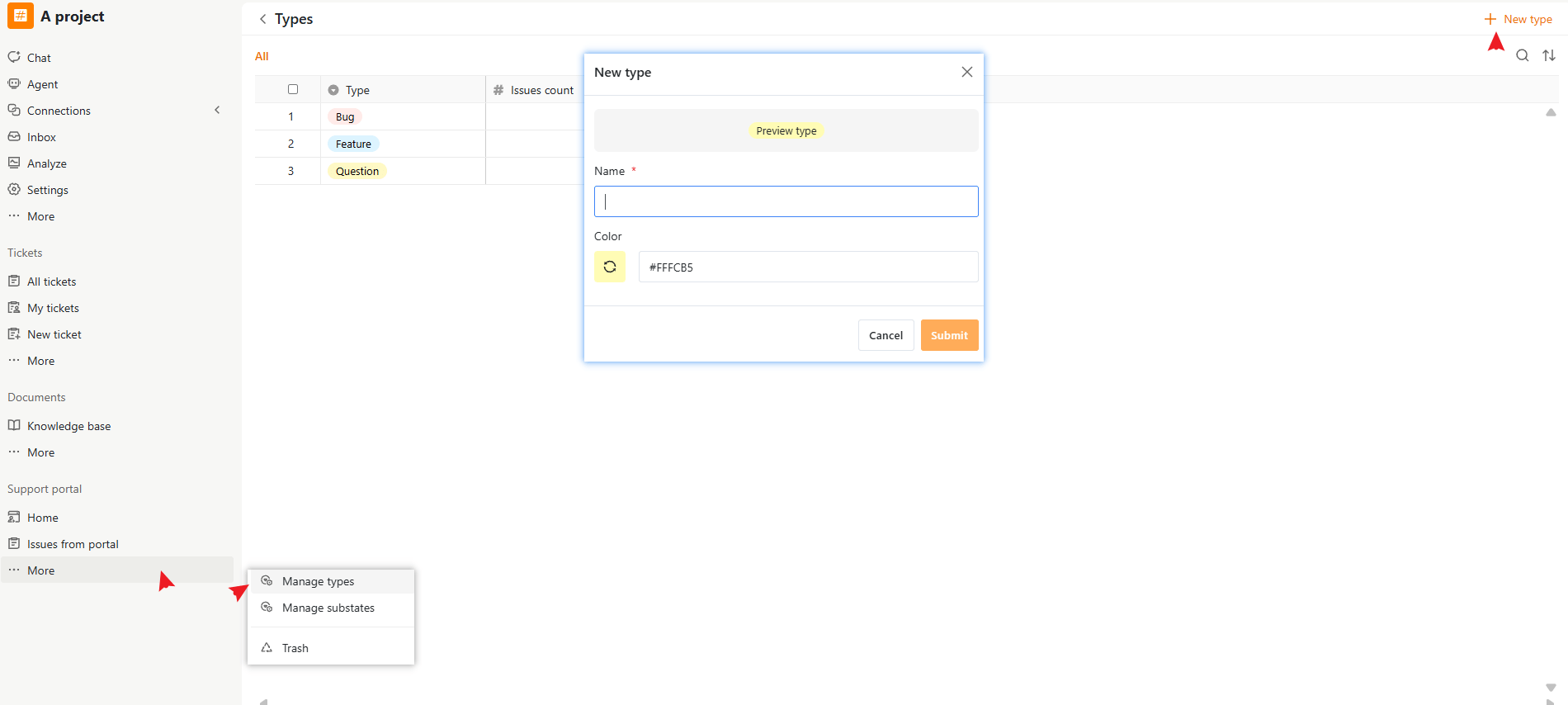
- Click New type in the upper-right corner.
- Enter a name for the type.
- Select a color.
- Click Submit.
Delete a Type
Administrators can remove existing types from the Types page. Deleting a type does not delete existing issues, but removed types will no longer be available for selection.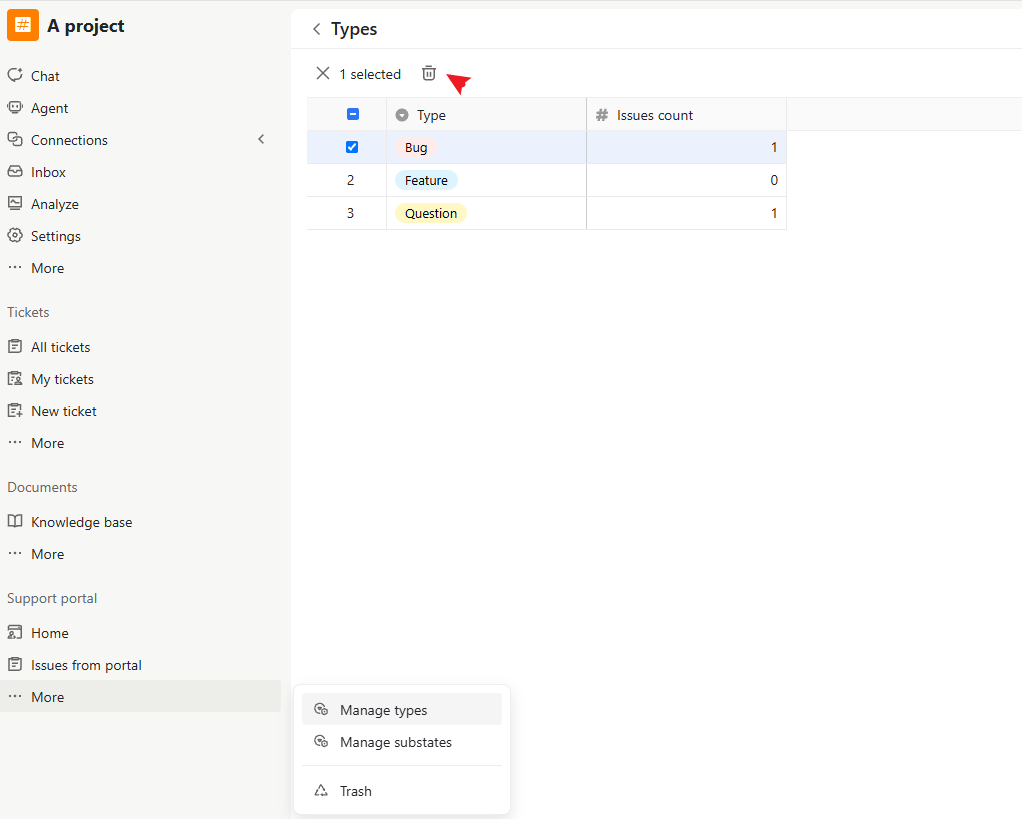
Manage Substates
Substates provide additional detail for issue progress under a main issue state. For example:- Open → New
- Open → Working on
- Closed → Completed
Default Substates
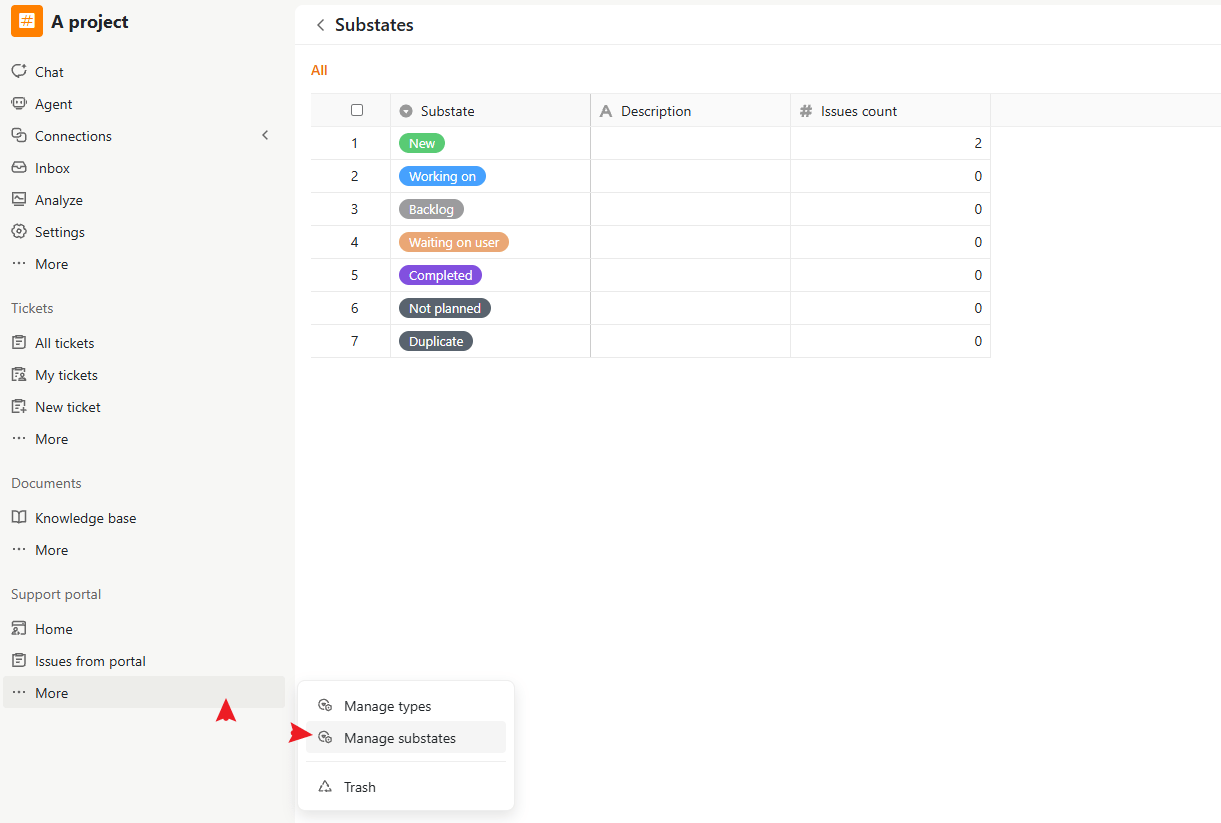
The Support Portal includes several default substates:- New
- Working on
- Backlog
- Waiting on user
- Completed
- Not planned
- Duplicate
Access the Substate Management Page
- In the left sidebar, go to Support portal.
- Click More.
- Select Manage substates.
Create a New Substate
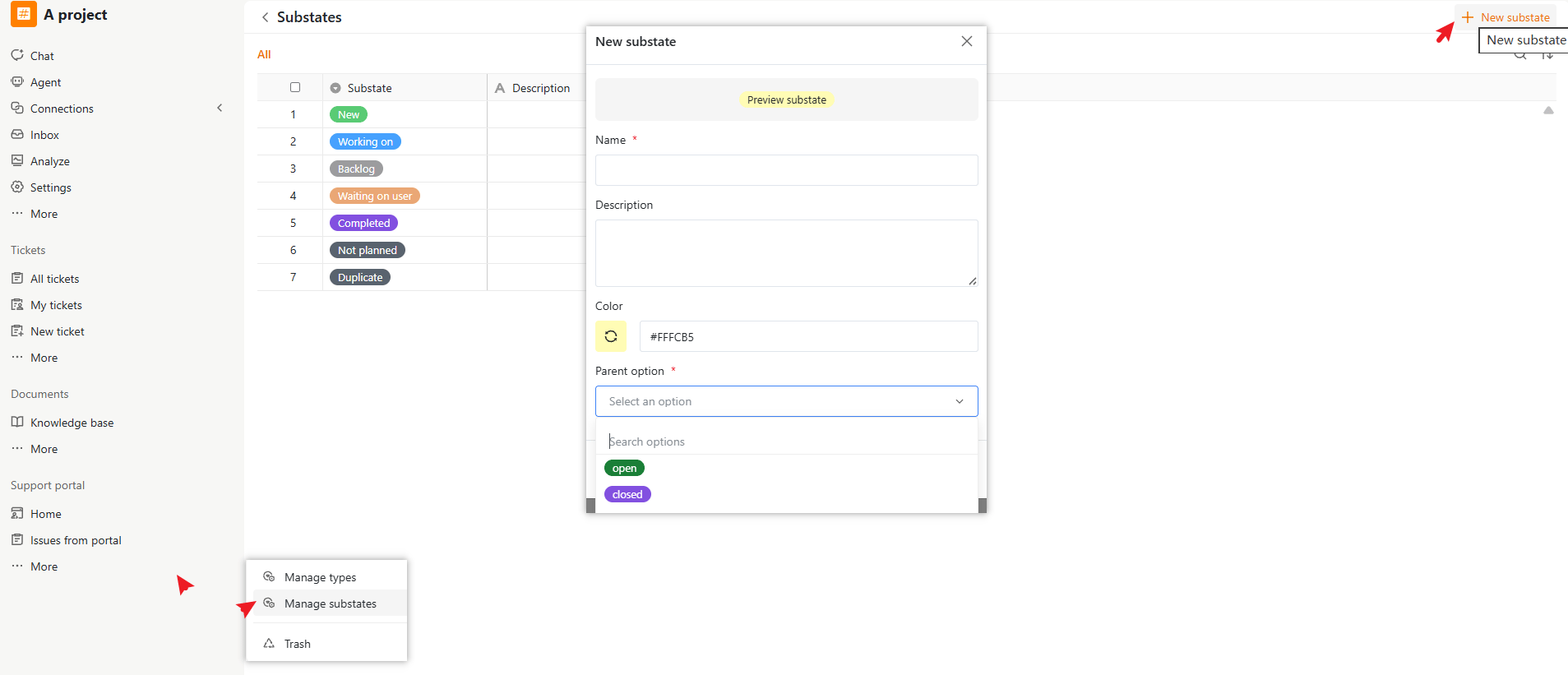
- Click New substate in the upper-right corner.
- Enter a name.
- Optionally enter a description.
- Select a color.
- Choose a parent state.
- Click Submit.
Parent States
Each substate must belong to a parent issue state. For example:
This helps organize issue progress more clearly in the Support Portal.
Delete a Substate
Administrators can remove existing substates at any time. Removing a substate does not delete existing issues, but the removed substate will no longer be available for future selection.